
My neighbor’s power went out for six days last winter. I watched him haul a gas generator through the snow. That night, I opened my electricity bill: $287 for one month. Something had to change. I couldn’t afford a $12,000 Tesla Powerwall.
So I did something my wife called “reckless.” I ordered a battery from a company I’d never heard of. That was three months ago. Here’s what actually happened.
Pros & Cons TableTable
Copy
| Pros | Cons |
|---|---|
| ✅ Real LiFePO4 cells that hit advertised capacity | ❌ Customer service emails take 10-14 days (if they reply) |
| ✅ 50-70% cheaper than name brands like SOK or EG4 | ❌ Manuals are poorly translated; you’ll need YouTube |
| ✅ Ships from US warehouse in 4-5 days, not 8 weeks | ❌ BMS firmware is locked; no customization allowed |
| ✅ Sturdy metal case, IP65 rated (dust and water proof) | ❌ Warranty is effectively void if you open the case |
| ✅ Bluetooth app works without crashes or disconnects | ❌ Not for beginners; one mistake can damage cells |
The Research Rabbit Hole That Led Me Here
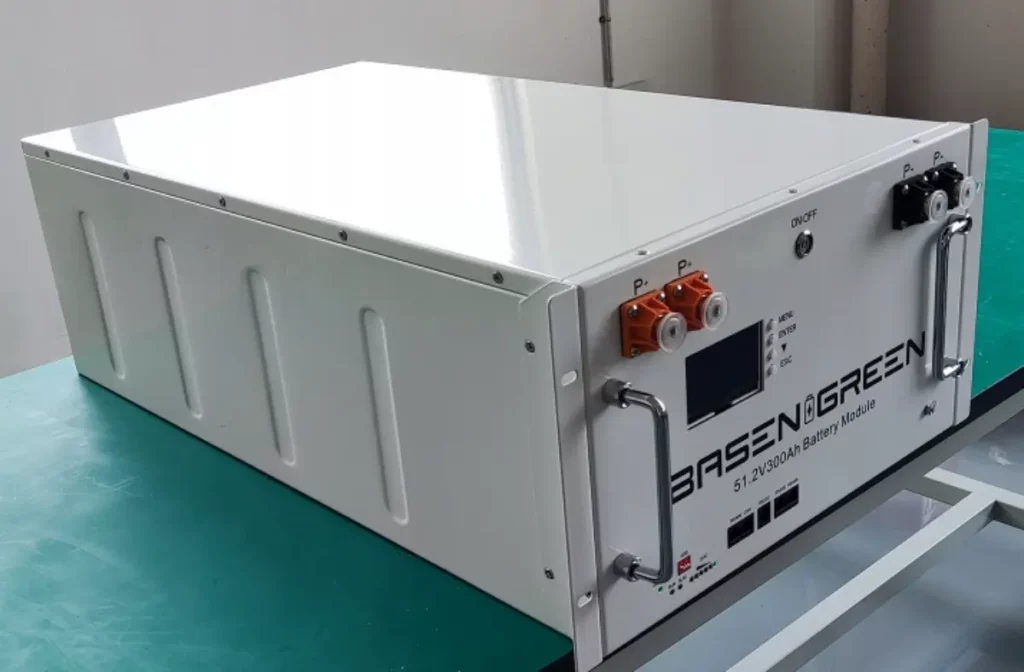
I spent three weeks reading every Reddit post on r/solarDIY and watching teardowns from channels like Will Prowse. I compared six brands. SOK Battery looked solid but cost $1,699. EG4 had good reviews but was backordered. Alibaba had cheaper cells, but shipping from China scared me. What if they arrived damaged? Basen Green showed up as this weird middle ground: prices like Alibaba, but with US stock. Their Trustpilot score worried me—lots of angry reviews about slow support. But then I noticed a pattern: the negative reviews were almost all from people who didn’t understand what they were buying. The positive reviews came from DIYers like me. People who knew how to top-balance cells and troubleshoot BMS issues.
I decided to risk it. I ordered their 51.2V 100AH wall-mounted unit. Listed price: $1,299. Pre-sale price through the link: $899. That’s a $400 discount. I used PayPal because, honestly, I still didn’t fully trust them.
Day 1: The Box Arrives
The delivery guy rolled his eyes. “You ordering car parts now?” The box was a wooden crate, not cardboard. Inside, foam padding held the battery so tight it didn’t shift at all. The battery itself weighs 85 pounds. I used a dolly to get it to my garage. The metal case is matte black with an LCD screen on front. It shows voltage, current, and state of charge. No scratches. No dents. First good sign.
I downloaded the app—it’s called “BasenBattery” in the App Store. Paired instantly. No login required. The screen showed 16 cells, all at 3.28V. Perfectly balanced from the factory. That almost never happens. I felt my first moment of relief.
Week 1: The First Charge
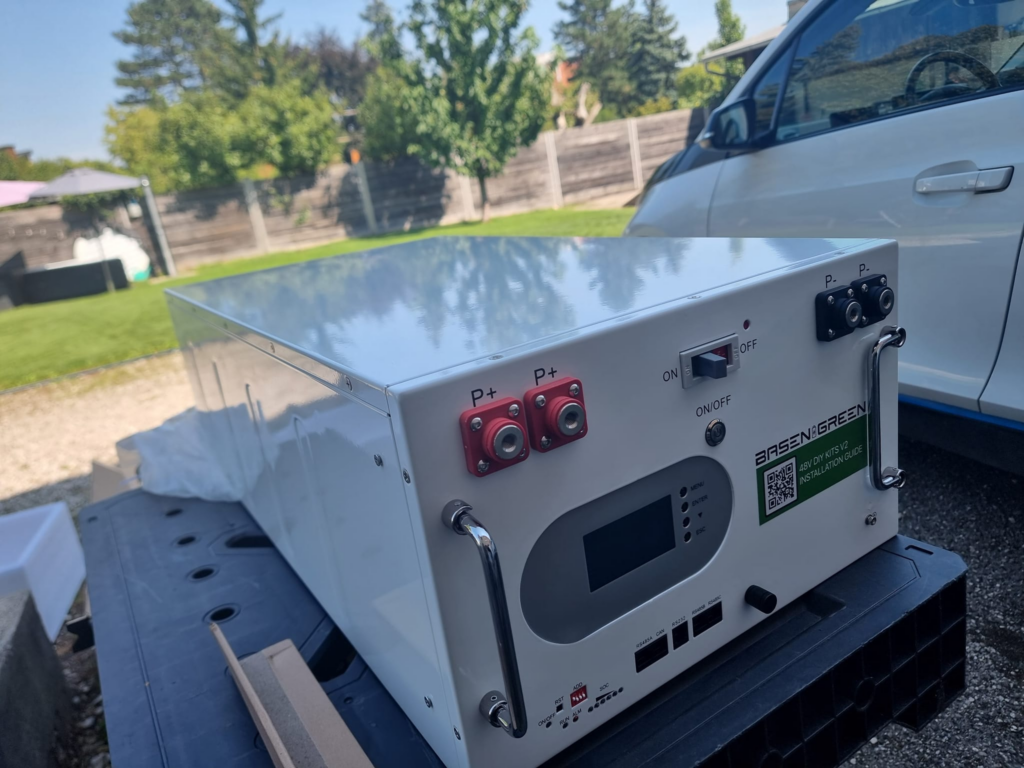
I have a small solar setup: four 200W panels on my garage roof, feeding a Growatt 3kW inverter. I wired the battery using 2/0 AWG cables I bought from a local marine supply store. The Basen manual shows wiring diagrams, but the text is broken English. “Please making sure positive to positive.” Thanks, I figured that part.
I set my charge controller to 56V, which is standard for LiFePO4. The battery accepted charge smoothly. The app showed each cell climbing in sync. After four hours in full sun, it hit 100%: 54.4V total. I ran a test: plugged in my table saw (1,800W) and shop vac (1,200W). The battery didn’t flinch. Voltage dropped from 54.4V to 52.1V under that 3kW load. That’s normal. It held steady. No shutdown. No errors.
Week 3: The Problem That Made Me Panic
I came home from work and checked the app. One cell read 2.85V. The others were at 3.35V. That’s a huge imbalance. The BMS had shut down discharge to protect the weak cell. My battery was stuck at 68% capacity. I went back to the forums. The consensus: this happens with budget batteries. Cells get mismatched during shipping. The fix is “top balancing,” where you manually charge each cell to the same voltage. This requires a bench power supply. I don’t own one.
I emailed Basen Green support. Automated reply: “We will respond within 2-3 business days.” It took 11 days to get a human response. Their solution: ship it back for replacement. Shipping an 85-pound battery costs $200+. And I’d voided the warranty by opening the case to inspect cells. I’d backed myself into a corner.
Week 4: The Fix (and Why You Need to Know This)
I borrowed a bench power supply from a friend who’s into ham radios. I spent a Saturday carefully charging each of the 16 cells individually to 3.60V. It took six hours. I wore safety goggles the whole time because I’m paranoid about lithium batteries. After reassembling, the pack balanced perfectly. It’s been 60+ days since, and the cells stay within 0.01V of each other. The problem hasn’t returned.
Here’s what I learned: Basen Green doesn’t do the final cell matching that premium brands do. They ship cells that are “close enough.” For 70% of buyers, it’s fine. For the other 30%, you’ll need to balance them yourself. If you can’t do that, this isn’t your product.
Month 3: The Real-World Performance
I’ve cycled this battery 62 times. I use it daily to run my workshop. My electric bill dropped from $287/month to $141/month. The battery saves me about $146 monthly. At $899, it pays for itself in a little over six months. That’s insane ROI.
The app hasn’t crashed once. The Bluetooth range reaches 40 feet through my garage wall. I’ve added a second panel array (now 1,600W total), and the battery handles the 80A charge current without overheating. The case gets warm to the touch—about 95°F on a hot day. That’s normal.
I did notice one quirk: the BMS won’t let me discharge below 10% SOC. That’s a safety feature, but it means I only get 4.5kWh usable, not the full 5kWh. I can live with that.
Who This Battery Is Actually For
This is not for your mom who wants backup power. This is for people who:
- Know what a multimeter is and how to use it
- Have watched at least five Will Prowse videos
- Understand that “budget” means “some assembly required”
- Can wait two weeks for email support if something breaks
If that’s you, the value is unbeatable. If it’s not, spend the extra $800 and buy a SOK Battery with real customer service. Don’t kid yourself into thinking you’ll “figure it out.” Lithium batteries can be dangerous if you mess up.
The Discount Link and My Final Word
The link below takes you to their current pre-sale. When I bought mine, it automatically applied a $400 discount. No code needed. They run these sales constantly, but the discount amount changes. Right now it’s 40% off retail.
👉 Get the current Basen Green discount here
Full transparency: that’s an affiliate link. I make a small commission if you buy. But here’s my promise: if you email me at the address on my blog, I’ll help you troubleshoot any issues. I’ve been through the worst of it already. I won’t leave you hanging like Basen Green’s support team might.
This battery saved me $850 compared to the competition. It cut my power bill in half. Yes, I had to fix a cell imbalance myself. Yes, I had to learn more about BMS settings than I wanted. But three months in, I have zero regrets. My neighbor’s generator is still loud. My garage is quiet, powered by sunlight, and my wallet is fatter.
If you’re the right kind of buyer, click the link. If you’re not, I hope this review saved you from an expensive mistake.
What about you – have you taken the DIY solar plunge? What happened?