
I have been running for over a decade and I thought I knew what “training hard” meant. Then I strapped a STRYD 5.0 to my shoe and realized I had been doing it wrong the entire time. Not because I lacked effort but because I was training blind — chasing pace numbers that get thrown off by wind, hills, heat, and fatigue. This little pod changed that.
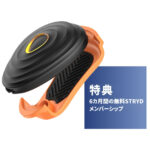
STRYD 5.0 is a running power meter — think of it as the running equivalent of what cyclists have been using for years. It clips onto your shoe, weighs 8 grams, and spits out data so granular it makes your GPS watch look like a sundial. The real question is whether a $350 foot pod is worth it for anyone who is not chasing a Boston qualifying time. Let me break it down.
Pros & Cons
| Pros | Cons |
|---|---|
| Environment-independent power data that ignores wind, hills, and heat | $350 is steep for a single-purpose running gadget |
| Auto-generated training plans based on your actual fitness level | Stryd Membership costs extra after the 6-month trial |
| Weighs only 8 grams you genuinely forget it is on your shoe | Clip attachment can be fiddly on some shoe models |
| Footpath form analysis shows exactly how your stride changes over a run | Power-based training has a real learning curve |
| 1-month battery life means you charge it about as often as you change your bedsheets | Overkill for casual joggers who just want to log miles |

What Is STRYD 5.0?
STRYD is made by a Colorado-based company that has been iterating on running power since 2015. The 5.0 is their latest generation and it is the best one yet. It is a tiny pod that clips onto your shoe laces or a dedicated mount and beams power, cadence, stride length, ground contact time, vertical oscillation, air power (wind resistance), incline, temperature, humidity, and altitude to your watch or phone over ANT+ and Bluetooth.
The magic is that it does not use GPS to calculate any of this. It uses a combination of accelerometers, gyroscopes, a barometer, and a wind sensor. That means its numbers are consistent whether you are running into a headwind on a coastal trail, climbing a 6% grade, or circling a track on a humid August afternoon. Pace tells you how fast you are moving. Power tells you how hard you are working. Those two things are not the same.
You pair it with the Stryd app (iOS and Android) or any compatible Garmin, COROS, Polar, Suunto, or Apple Watch. Once paired, you get real-time power data during your run and a post-run breakdown that borders on excessive — in the best way.
What Makes It Different From Just Using a Watch?
Here is the thing most runners do not realize: pace is a terrible proxy for effort. If you run 6:00 per kilometer on flat ground with no wind, that is one level of effort. Run the same pace into a 20 km/h headwind up a steady grade and your actual workload might be 30% higher even though your watch says nothing changed.
STRYD catches that. It measures your actual power output in watts — the same metric cyclists have used for decades to structure their training. The 5.0 adds a wind sensor that directly measures air resistance. Previous generations estimated it. This one knows. That matters more than you think if you train outdoors year-round.
The other big differentiator is Critical Power. STRYD automatically calculates your CP — the highest power you can sustain without fatiguing — and builds five training zones around it. These zones update daily based on your recent runs. You are always training at the right intensity, not the intensity you think you should be at based on a 5K you ran three months ago.

The Training Plans Are Surprisingly Good
I was skeptical about algorithm-generated training. Most AI coaching tools are glorified random number generators dressed up in a wellness aesthetic. Stryd’s plans are different because they are anchored to your actual power data, not some generic template.
You tell the app your goal — say, a sub-20-minute 5K or a marathon PR — and it builds a calendar of workouts tuned to your CP and power zones. The plan adjusts week to week based on whether you are hitting your targets or fading. If you miss a workout, it reshuffles. If you are crushing intervals, it nudges the intensity up. It took me about three weeks to stop second-guessing it and just trust the numbers.
That said, the Stryd Membership that enables this is not free forever. You get 6 months included with the purchase, then it is a subscription. If you stop paying, you keep basic power metrics but lose the adaptive training plans and advanced analytics. It is worth factoring into the cost because the hardware without the membership is honestly half the product.
Footpath: Seeing Your Stride Like Never Before
One feature I did not expect to care about but now check after every run is Footpath. It visualizes your running form — showing ground contact time balance between left and right foot, vertical oscillation, and leg spring stiffness. If you have ever dealt with an injury that traced back to a form imbalance you did not know you had, this is the kind of data that makes you pay attention.
I noticed my left leg was spending more time on the ground than my right, especially on longer runs. A few weeks of conscious adjustment and targeted strength work later, the asymmetry shrank. My watch never would have told me that.
What Is the Trade-off?
Let me be direct: $350 is not cheap for a device that does one thing. Garmin sells an entire running watch for less. If you are running twice a week for general fitness and do not care about structured training, this is probably not for you. A GPS watch with heart rate will serve you fine.
The clip attachment is mostly good but not perfect. On shoes with thick, flat laces it holds rock solid. On thin, round laces or elastic speed laces, the pod can wiggle loose on trail runs. I have not lost mine, but I have read enough forum posts to double-check it before every run now.
And the power-based training philosophy itself has a learning curve. If you are used to training by pace or heart rate, switching to watts-based zones feels unnatural at first. It took me about two weeks of “why is my training plan telling me to run this slow” before the concept clicked. Once it does, you realize you were overcooking your easy runs and undercooking your hard ones.

Who Should Buy It?
If you are training for a race — any distance, any pace — and you want to stop guessing at your effort level, STRYD 5.0 is one of the best investments you can make. The data quality is excellent, the environment correction actually works, and the adaptive training plans remove the mental load of figuring out what workout to do each day.
If you are a casual runner who just wants to log miles and enjoy the outdoors, skip it. The value proposition shrinks fast when you are not using the structured training features. A good heart rate monitor will get you 80% of the way there at a fraction of the cost.
If you do decide to go for it, Aoiro.shop is an authorized STRYD dealer with solid international shipping options and a stock that actually stays in inventory — which is more than I can say for some resellers I have tried.
Where to Buy
(affiliate link, I may earn a commission at no extra cost to you)
The Bottom Line
STRYD 5.0 is not for everyone. But for the runner who is serious about improving — who has plateaued, who keeps getting injured, who wants training that adapts to their actual body instead of a generic plan — it is genuinely transformative. I have been using it for months now and I cannot imagine going back to training without power data. It is not about being faster. It is about knowing exactly what “faster” costs and whether you can afford it today.
At $350 it is not an impulse buy. But neither were your running shoes, your watch, or your race entries. If you are going to invest in training, invest in knowing how hard you are actually working.